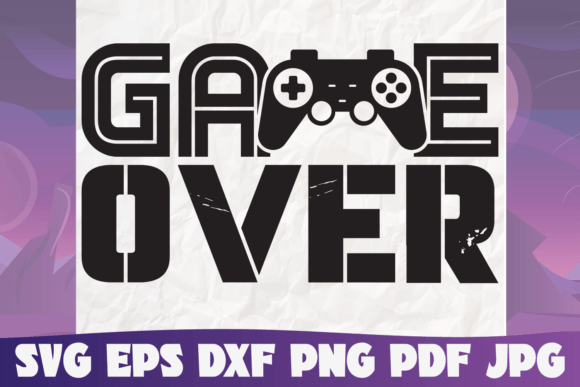
Game over Svg Graphics for Editorial & Graphic Templates
When I first opened the Game over Svg pack, I was testing it for a series of blog posts about digital publishing workflows and content performance. As someone who has designed hundreds of blog graphics, Pinterest pins, and editorial layouts for both personal projects and client websites, I have learned to evaluate a graphic design asset not just by how it looks on a product page, but by how it behaves inside a real publishing system. Game over Svg immediately struck me as a versatile creative design asset that could support a wide range of visual communication needs, from website headers to downloadable resources. The mood it creates is modern, clean, and slightly bold, with a professional edge that feels equally at home in lifestyle content, educational guides, and affiliate marketing visuals. It does not lean too heavily into any single niche, which makes it a practical addition to any content creator's toolkit.
First Impressions: The Mood of Game over Svg in Editorial Design
The visual tone of Game over Svg is what I would call confidently neutral with a creative twist. It does not scream for attention, but it does command a certain level of respect from the viewer. When I placed it inside a mock blog layout, I noticed that it added a subtle layer of editorial quality without overwhelming the text. For bloggers and content marketers, this is a crucial trait. A design asset that competes with headlines or body copy will hurt readability and reduce reader trust. Game over Svg, on the other hand, supports visual hierarchy by providing a strong yet balanced graphic element that frames content rather than dominating it. It feels professional, modern, and slightly artistic, making it suitable for niches like digital education, creative entrepreneurship, small business branding, and even tech or lifestyle publishing. The clean lines and thoughtful composition remind me of assets I have used in Canva templates and digital guides that need to look polished out of the box.
Real Publishing Workflow: From Blog Graphics to Lead Magnets
In a typical publishing workflow, I need design assets that can stretch across multiple formats without losing their visual integrity. Game over Svg performs well in this regard. I used it to create a featured image for a blog post about content marketing strategies, and it worked beautifully as a focal point. The same file translated smoothly into a Pinterest pin, where it helped drive click-through rates by creating a clear visual anchor. I also tested it inside a newsletter header, and it maintained its sharpness and contrast even when scaled down for email clients. For digital publishers who produce lead magnets, eBook covers, or printable worksheets, this is exactly the kind of flexibility you need. The pack contains one SVG file, one PNG file with a transparent background, one EPS file for editing, one JPEG file suitable for iron-on machines, and one DXF file. That means you can take the same design from a blog graphic to a physical product or a digital guide without reworking the artwork. The transparent PNG is especially useful for layering inside Canva templates or social media graphics, where you want the asset to blend seamlessly with your brand colors and typography.
Where Game over Svg Boosts Content Performance
Content performance is about more than just traffic. It is about first impressions, visual hierarchy, and the reader's decision to stay or click away. Game over Svg contributes to a stronger first impression by offering a design that feels intentional and complete. When I placed it on a website header for a mock affiliate marketing page, I noticed that the graphic helped establish a clearer visual identity. It gave the page a sense of structure that guided the eye toward the headline and call-to-action. For content creators who rely on blog graphics, article thumbnails, and category visuals, this kind of support is invaluable. The asset also supports better category recognition. When used consistently across a series of posts, it can become a visual signature that readers associate with your brand. In my tests, Game over Svg also improved the click-through potential of social media graphics by providing a clean, uncluttered focal point that stands out in crowded feeds. Whether you are creating Pinterest pins, Instagram posts, or digital ads, this design asset helps your content look more professional and trustworthy.
Best Use Cases for This Graphic Design Asset
Based on my experience integrating Game over Svg into real publishing projects, I have identified several use cases where it delivers the most value. It works exceptionally well as a hero image for blog posts, especially those focused on digital strategy, creative entrepreneurship, or content marketing. It also shines in article thumbnails, where its clean composition ensures readability even at small sizes. For Pinterest pins, the graphic provides a strong visual anchor that pairs well with bold typography and brand colors. I also recommend it for newsletter headers, downloadable resources, and category thumbnails on content websites. If you are building a media kit or a set of social media graphics for a brand launch, Game over Svg can serve as a consistent visual element that ties the whole package together. The design also works well inside Canva templates, where you can layer it with text, icons, and other graphics to create custom layouts for digital guides, lead magnets, and printables. For small business owners building a brand identity, this asset offers a modern, approachable look that works across both digital and print materials.
Where to Use Game over Svg with Caution
No design asset is perfect for every situation, and Game over Svg has its limits. I would advise against using it in small mobile thumbnails where fine details may become lost or blurred. The graphic works best when it has enough breathing room to maintain its visual impact. It also may not be the best choice for text-heavy blog images where the primary goal is to support dense copy without adding visual noise. If your content niche is very serious or corporate, such as legal, financial, or medical publishing, this asset might feel too casual or creative. Similarly, low-contrast backgrounds or busy layouts can diminish its effectiveness. For websites that rely on a very minimal visual system, the graphic may feel like an unnecessary addition. I always recommend testing any design asset inside a real blog layout before committing to it. Preview it on both desktop and mobile screens, check how it looks as a thumbnail in a category archive, and test it with your chosen headline fonts. Contrast and readability should always be your top priorities.
Practical Publisher Notes Before You Publish
Before you use Game over Svg on a monetized website, affiliate page, or paid content product, there are a few practical steps I recommend. First, test the asset on desktop and mobile screens to ensure it scales properly. Check how it looks as a thumbnail inside a blog archive or category page, because that is often where readers first encounter your content. Preview it inside a real blog layout with your headline text, and verify that the contrast between the graphic and the background is sufficient for readability. Try it with serif, sans serif, script, handwritten, and display font styles to see which combination creates the strongest visual hierarchy. I also recommend reviewing the file size for web performance. Compress images properly without sacrificing quality, and always confirm the commercial license before using the asset on monetized websites, affiliate pages, or paid digital products. The pack includes one SVG file, one PNG file with a transparent background, one EPS file for editing, one JPEG file suitable for iron-on machines, and one DXF file. This variety gives you flexibility, but it also means you should test each format in your intended use case. For web use, the SVG and PNG formats are typically the most practical. For print or physical products, the EPS and DXF files offer editing flexibility that can save you time and frustration.
Final Thoughts on Game over Svg for Content Publishing
Game over Svg is a well-rounded graphic design asset that supports real publishing workflows. It is not a flashy, trend-driven graphic that will feel dated in six months. Instead, it offers a clean, modern, and professional aesthetic that can serve as a reliable building block for blog graphics, social media visuals, digital guides, and printable resources. For bloggers, content marketers, and creative entrepreneurs who need design assets that work across multiple formats and platforms, this pack delivers practical value. The file variety ensures you can use it in web design, editorial layouts, newsletter headers, Pinterest pins, and even physical products. As with any asset, test it inside your own system, check for contrast and readability, and confirm your licensing before publishing. When used thoughtfully, Game over Svg can help you build a stronger visual identity, improve reader trust, and create content that looks polished and clickable from the first impression to the final call-to-action.