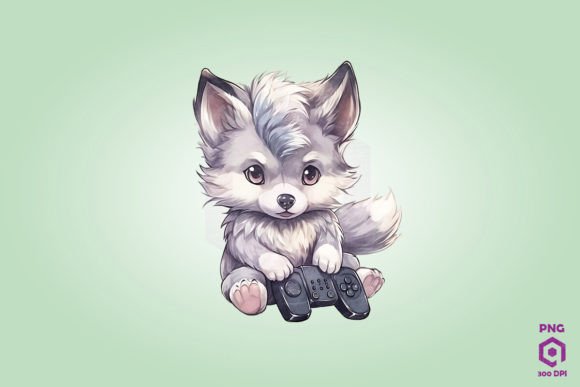
Gray Wolf Playing Video Game Graphics & Illustrations
When I first opened the Gray Wolf Playing Video Game clipart set, I was working on a branding project for a small local coffee shop that wanted to break away from the usual rustic farmhouse aesthetic. The owner loved the idea of mixing wilderness with modern pop culture. This graphic design asset immediately caught my attention because it balances a wild, untamed subject with a relatable, contemporary activity. The wolf is not howling at the moon or standing on a mountain peak. It is holding a controller, relaxed, focused, and completely in its element. That shift in mood opens up a whole range of branding possibilities for small business owners who want to feel approachable, playful, and just a little bit unexpected.
First Impressions and Brand Personality Fit
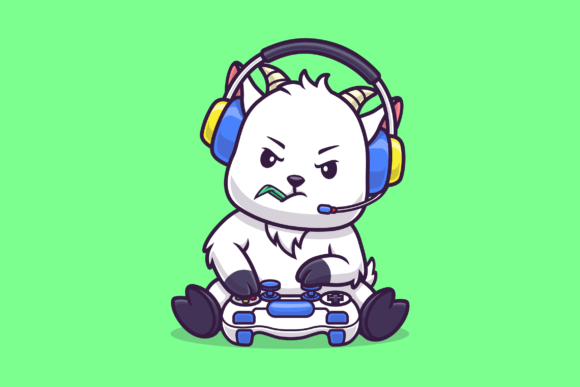
The Gray Wolf Playing Video Game illustration carries a mood that is surprisingly versatile. It feels both cozy and bold. The wolf itself suggests strength, loyalty, and a connection to nature, while the video game controller introduces a layer of modern leisure, indoor comfort, and youthful energy. For a local business, this combination can signal that the brand is not taking itself too seriously, but still has a strong identity. I immediately thought of a coffee shop that roasts its own beans and hosts game nights, or a boutique that sells outdoor gear but also stocks indie video game merchandise. The asset feels handmade in its line quality and shading, but the concept is clever enough to feel premium rather than generic. It suggests a brand personality that is adventurous, friendly, and culturally current.
For a bakery or dessert shop, this wolf could become a mascot on packaging for late-night treats or gaming-themed cookie boxes. For a handmade soap business, it could be used on labels for a line of woodsy, masculine scents marketed to gamers and outdoor enthusiasts alike. The design does not feel overly feminine or masculine, which gives it flexibility across different product categories. It leans into a modern, slightly edgy but still warm aesthetic that works well for small businesses targeting millennials and Gen Z customers who value authenticity and a sense of humor.
Real Applications for Packaging and Product Labels
In my experience, the best graphic design assets are the ones that can be dropped into a packaging layout without requiring hours of rework. The Gray Wolf Playing Video Game clipart is well suited for product labels, especially on coffee bags, tea tins, hot chocolate pouches, or energy bar wrappers. The wolf sitting with a controller implies a moment of rest, which aligns perfectly with beverage brands that market themselves as a break from the daily grind. I tested it on a mockup for a small batch coffee roaster, and the illustration worked beautifully as a hero graphic on the front of the bag. It drew the eye without overwhelming the product name and roast notes.
For local businesses that sell physical goods, this asset can be used on hang tags, thank-you cards, stickers, and even menu graphics. A cafe could print it on a small sticker to seal pastry bags or to decorate to-go cups. A candle brand could use it on labels for a scent called "Late Night Lobby" or "Campfire Console." The illustration format is clean enough to hold its own as a standalone element, but it also layers well with other design components like hand-lettered typography or geometric borders. I particularly like how it works as a decorative brand element on promotional banners and social media graphics, where the wolf becomes a recognizable character that customers start to associate with the business.
Strengthening Brand Presentation and Customer Trust
When I evaluate design assets for small business branding, I always ask whether the asset helps the business look more professional and trustworthy. The Gray Wolf Playing Video Game illustration does exactly that, but in a subtle way. It adds a layer of intentionality to the packaging. When a customer picks up a product and sees a custom-style illustration rather than a stock photo or a plain logo, they perceive that the business cares about details. That perception builds trust. For a handmade business, this kind of asset can elevate the presentation from homemade to artisanal. For a local food brand, it can make the product feel more premium on a crowded shelf.
The illustration also supports visual hierarchy. On a product label, the wolf can serve as the hero element, drawing the eye first, while the brand name and product description sit in a clear, readable position nearby. That kind of structure helps customers process information quickly, which is especially important for small businesses selling at farmers markets, pop-ups, or retail shelves where attention spans are short. The emotional connection comes from the wolf being relatable. It is not a generic animal silhouette. It is a character with a hobby, which invites customers to project their own interests onto the brand. That emotional hook is valuable for building loyalty and repeat purchases.
Where the Asset Works Best
Based on my testing across multiple mockup scenarios, the Gray Wolf Playing Video Game illustration performs best in these contexts. It shines as a hero graphic on product labels for coffee, hot cocoa, tea, snack foods, and gaming-related merchandise. It works well as a decorative brand element on promotional banners, website headers, and social media campaign graphics where the goal is to stop the scroll. It also makes an excellent printable design for thank-you cards, inserts, and seasonal packaging where you want to surprise and delight the customer. For boutique visuals, especially in stores that sell a mix of outdoor apparel and pop culture items, this asset can tie the whole brand identity together. It even works for editorial design in a small business newsletter or a zine that accompanies a product launch.
I also found that the illustration translates well to product mockups for digital marketing. When I placed it on a coffee bag mockup and a sticker sheet mockup, the PNG transparency held up cleanly, and the colors did not clash with the background. For businesses that use Canva templates or simple design tools, this clipart is easy to drop in and scale. The file format is practical for small business owners who are not professional designers but still want polished marketing visuals.
Where to Use This Design Carefully
No graphic design asset is perfect for every situation, and the Gray Wolf Playing Video Game illustration has its limits. I would caution against using it for formal corporate branding, such as legal documents, financial services, or professional consulting businesses, where the playful tone could undermine credibility. It also does not suit luxury minimalist brands that rely on sparse layouts and muted tones, because the wolf illustration has a lot of visual weight and detail that can compete with the negative space. On very small labels, such as sample sizes or tiny jar lids, the detail of the controller and fur texture may become muddy or hard to read. I recommend testing it at the actual print size before committing to a large production run.
In crowded product packaging where there is already a lot of text, ingredient lists, or legal information, the illustration can feel like an extra element competing for attention. In those cases, it is better to use it as a small accent or a seal rather than a hero graphic. Low-contrast backgrounds, such as light gray or pale beige, can also wash out the details of the wolf, so I suggest pairing it with a solid white or dark background for maximum impact. If your brand identity relies heavily on serif fonts and formal layouts, you may need to adjust the surrounding design to match the casual tone of the illustration. Script fonts and handwritten styles tend to pair well with this asset, while very formal display fonts can feel mismatched.
Practical Brand Designer Notes for Small Business Owners
Before you use this Gray Wolf Playing Video Game asset for your business, I recommend running through a few quick checks. First, test it on a real packaging mockup. Print it at the actual size you plan to use and see how the details hold up. If the eyes or the controller buttons blur, you may need to use a larger version or simplify the background. Second, check how it looks in black and white. If you ever print in grayscale for a flyer or a newspaper ad, the illustration should still be readable and recognizable. Third, preview it on small labels. A sticker that is two inches wide may not show the controller clearly, so consider using only the wolf head or a simplified version for tiny applications.
Fourth, test the illustration beside different font styles. I tried it with a bold sans serif, a casual handwritten font, and a clean serif. The handwritten and sans serif options felt natural. The serif worked but required extra spacing to avoid looking too formal. Fifth, compare your packaging with competitor products. If every other brand in your category uses minimalist design, this illustration can help you stand out. If your competitors already use animal mascots, make sure your wolf has a distinct enough pose and style to avoid confusion. Sixth, confirm the commercial license. If you are buying this from a creative marketplace, check that the license covers physical product sales, packaging, and promotional use. For client work, always verify that the license allows for commercial projects and multiple end products.
Finally, think about the long-term role of this illustration in your brand identity. If you plan to use it on every product and every social media post, it will become a core part of your visual language. That can be powerful, but it also means you should be consistent with the style. Pair it with the same color palette, the same font family, and the same illustration style across all touchpoints. If you treat it as a seasonal or campaign-specific element, you have more flexibility to rotate it out later. Either approach works, but clarity from the start will save you time and design headaches down the road.
For local businesses, especially those just starting to build a brand identity, illustrations like this one offer a shortcut to personality. They give customers a visual anchor to remember. The Gray Wolf Playing Video Game clipart is not just a decorative graphic. It is a storytelling tool. It tells customers that your brand is playful, modern, and not afraid to mix the wild with the everyday. When used thoughtfully on packaging, labels, social media graphics, and promotional materials, it can transform a simple product into a memorable experience. That is the kind of design asset that helps a small business compete with larger brands and earn the loyalty of a local audience.