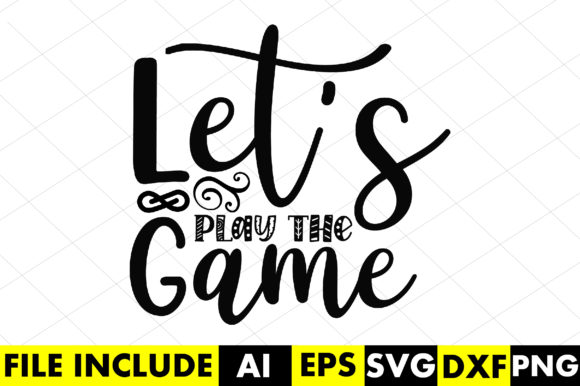
Let's Play the Game: Graphics & Crafts for Digital Sellers
As an experienced digital seller, I’ve evaluated hundreds of graphic design assets before committing them to my Etsy shop, print-on-demand catalog, and creative marketplace listings. When I first opened the download for Let’s Play the Game, I immediately recognized its potential for a wide range of projects. The mood is playful yet polished, with a visual personality that leans toward bold, retro-inspired motifs. Think dice, game pieces, card suits, and whimsical typography—all rendered in a clean, modern style that appeals to both crafters and commercial designers. This is not a generic clipart set; it’s a focused collection that can anchor a themed product line or add a distinctive touch to seasonal bundles.
This item is a digital download, and no physical items are sent. The package includes SVG, PNG, DXF, PDF, and EPS formats, all zipped for easy downloading. You will need unzipping software such as WinZip or WinRAR to extract the files. For anyone selling on Etsy, Creative Fabrica, Shopify, or print-on-demand platforms, this asset offers a solid foundation for creating sellable products that feel cohesive and professional.
First Impressions and Target Audience
The visual hierarchy of Let’s Play the Game immediately suggests a niche audience: event planners, party supply sellers, teachers, game night enthusiasts, and parents looking for unique decorations. The design’s balance of vibrant colors and clean lines makes it suitable for both digital and physical products. I can see it attracting buyers who want to create custom invites, cupcake toppers, or banner graphics for board game–themed celebrations. The asset also fits well into the growing trend of nostalgic, retro-inspired crafts—perfect for small business branding that aims to feel approachable and fun.
From a seller’s perspective, this graphic design asset fills a gap in many marketplaces. There are plenty of floral and boho bundles, but a well-executed game-themed set stands out. It has the potential to become a bestseller in a craft category if presented correctly.
Testing the Asset Across Product Types
Before publishing any listing, I always test a new design on several product mockups. For Let’s Play the Game, I started with the most common applications:
- SVG products for Cricut and Silhouette: The clean lines in the SVG files cut smoothly on vinyl and cardstock. I tested a small die-cut sticker and a larger iron-on t-shirt design. Both turned out crisp, with no weird gaps or overlapping issues.
- PNG sublimation designs: The transparent backgrounds made it easy to layer onto mugs, tumblers, and tote bags. The colors stayed vibrant after sublimation printing, though I recommend a test print on a sample substrate to verify contrast.
- Printable wall art and greeting cards: The PDF and EPS formats allowed me to resize without losing quality. I created a simple 8x10 print and a 5x7 card—both looked sharp and ready for sale.
- Canva templates and social media graphics: I imported the PNG versions into Canva and used them as decorative elements for a game night invitation template. The design scaled well, and adding a modern sans-serif font kept the layout clean.
- Digital paper packs and scrapbooking kits: The EPS file let me recolor elements to match different palettes, which is useful for creating themed bundles on Creative Fabrica.
This asset is also a strong candidate for product bundles. Pairing it with a complementary font (like a playful script or a bold display type) and a set of coordinating backgrounds can increase perceived value and help you sell a complete design bundle rather than a single file.
Product Presentation and Thumbnail Appeal
On a marketplace like Etsy, your thumbnail is your first impression. I used Let’s Play the Game to create a mockup preview showing a t-shirt with the design, a mug with the same graphic, and a framed print. The vibrant colors popped against both light and dark backgrounds, but I found that a white or light gray mockup background gave the best contrast. For listing images, I recommend using a flat lay that includes the physical products (like a printed card, a sticker sheet, and a fabric swatch) to show buyers what they can actually create.
Visual storytelling is key. When you present this asset, emphasize the “game night” or “party” theme in your listing copy. Use lifestyle images that show people playing board games or celebrating with the designs. This builds customer trust and helps them envision the finished product in their own homes or events.
Where It Shines and Where to Be Cautious
Let’s Play the Game works best in large product previews, themed bundles, and decorative layouts. It’s ideal for:
- Printable party decorations (banners, cupcake toppers, treat boxes)
- T-shirt graphics and hoodie designs for game lovers
- Mug wraps and tumbler sublimation projects
- Invitation templates for birthday or game night events
- Social media graphics for promotions and blog posts
- Packaging design for small business branding (e.g., a local board game café)
However, I’d advise caution in a few situations:
- Tiny sticker details: Some of the more intricate elements (like small dice faces or card symbols) may lose definition when scaled down below 1 inch. For small stickers, stick to the simpler, bolder shapes.
- Overly complex layouts: Avoid layering too many elements from this set in one design. The visual hierarchy can become cluttered, especially on merchandise like tote bags where a single focal graphic works better.
- Low-resolution print products: Always verify the DPI of your output. The PNG files are high resolution, but if you’re using them for large-format prints, consider the EPS for scalability.
- Crowded thumbnails: When using the design as a standalone product thumbnail, keep the background simple. Too many game pieces in a small square can confuse buyers.
- Dark backgrounds and weak contrast: The asset uses bright colors that work well on white or light backgrounds. On dark backgrounds, the contrast may be insufficient for some shapes—add a white outline or shadow if needed.
- Cricut cutting lines: For intricate cut projects, inspect the SVG file for overlapping paths. I found a few minor overlaps that required cleaning in software, but overall the cut quality was good.
Practical Seller Notes and File Preparation
Before you list any product using Let’s Play the Game, take these steps:
- Test on real mockups: Use free or paid mockup generators to see how the design looks on mugs, shirts, and prints. This helps you spot any alignment or scaling issues.
- Preview as a marketplace thumbnail: Shrink the design to 200x200 pixels. Does it still read clearly? If not, simplify the composition.
- Check color on white and dark backgrounds: The design may look different on a white shirt vs. a black one. Create separate color variants if needed.
- Test print colors: Sublimation and inkjet printing can shift hues. Print a sample and compare to the on-screen version.
- Verify PNG transparency: Open the PNG file in your design software and ensure the background is truly transparent, with no white fringing.
- Inspect SVG cut quality: Import the SVG into Cricut Design Space or Silhouette Studio. Check for any closed paths that shouldn’t cut.
- Confirm file resolution: The included files are designed for both screen and print, but always double-check the DPI (300 DPI is standard for print).
- Organize files clearly: Your customers will appreciate a folder structure that separates SVG, PNG, DXF, PDF, and EPS. Add a simple readme with usage tips.
- Pair with font styles: This asset works well with a bold sans-serif font for a modern look, a playful script for a whimsical feel, or a vintage display font to match the retro vibe. I tested it with a clean serif for a more sophisticated invitation and it held up nicely.
- Confirm commercial licensing: Before selling finished products, ensure your license allows commercial use. Most marketplaces offer a standard commercial license, but always read the fine print.
These steps might seem tedious, but they save you from negative reviews and refunds. A well-prepared product listing signals professionalism and builds trust with your customers.
Final Thoughts on Using Let’s Play the Game in Your Shop
This graphic design asset is a solid addition to any digital seller’s toolkit, especially if you cater to the craft and party supply niche. The file formats cover all major use cases—Cricut projects, sublimation, printable designs, and Canva templates. The playful theme taps into a consistent demand for game-related products, from birthday parties to wedding reception entertainment. With careful testing and presentation, Let’s Play the Game can help you create a cohesive product line that stands out in a crowded marketplace.
As always, the key to success with any digital product is how you use it. Pair it with strong branding, clear product photography, and honest listing descriptions. If you’re looking for a reliable commercial design that appeals to both casual crafters and small business owners, this asset is worth adding to your creative library. Just remember to treat it as a foundation—build your own unique products around it, and you’ll see the results in your sales.